
North Shore vs. West End: Mastering Hyper-Local Marketing in Vancouver
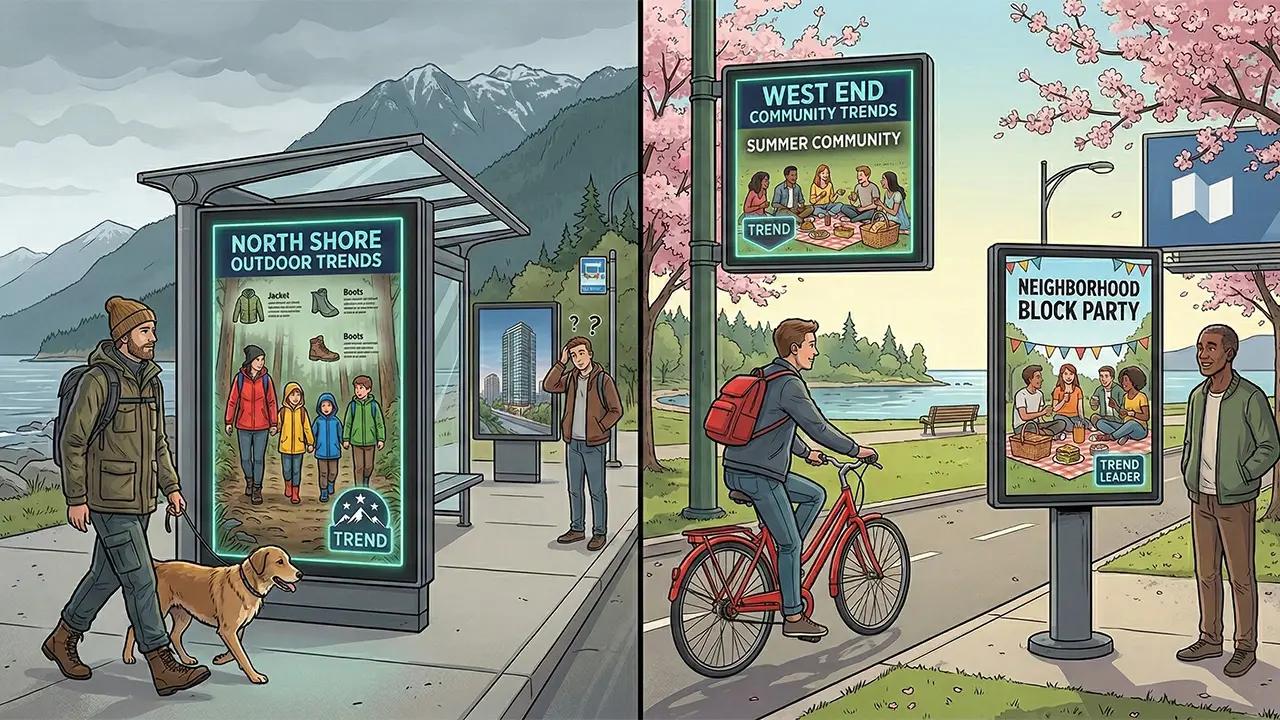
Vancouver is often described as a single, cohesive metropolitan area, but anyone who has lived here knows that the reality is far more complex. This is a "City of Neighborhoods," a collection of distinct urban villages, each with its own micro-culture, spending habits, and community values. For business owners, this means that what sells in Kitsilano often fails in West Vancouver.
If you are still running one-size-fits-all campaigns across the Lower Mainland, you are likely wasting a significant portion of your budget on irrelevance. To succeed in 2026, you must embrace hyper-local marketing Vancouver strategies that treat each postal code as its own unique market. This report dives into why generic campaigns are a relic of the past and how community-based advertising is the key to capturing the hearts (and wallets) of Vancouver’s diverse residents.
The «City of Neighborhoods»: Why Generic Campaigns Fail

The primary reason generic marketing fails in British Columbia is that it ignores the "Neighborhood DNA" of our city. A generic ad for a new fitness studio might reach someone in Burnaby, but if that studio is located on the North Shore, the "Commute Friction" makes the lead nearly worthless.
In the modern attention economy, consumers have a very limited radius of trust. They are looking for solutions that exist within their daily «Hyper-Local Journey»—the three-block radius where they get their coffee, drop off their dry cleaning, and visit their doctor. When a campaign is too broad, it triggers «The Black Box Problem», where you pay for mass exposure but receive zero local engagement. By focusing on neighborhood marketing strategies, you ensure that every dollar spent is talking to a person who is physically and psychologically capable of visiting your store today.
Demographics Deep Dive: Kitsilano Yoga Moms vs. West Van Luxury

To master hyper-local marketing Vancouver, you must understand the cultural nuances between our "villages". Consider the demographic gulf between a Kitsilano "Yoga Mom" and a West Vancouver luxury homeowner.
Kitsilano Receptivity: This demographic values sustainable marketing strategies in Vancouver, organic growth, and community wellness. An ad here should focus on ethics, health, and local origins.
West Vancouver Receptivity: Here, the focus shifts toward exclusivity, heritage, and premium service. A "discount" ad that works in a college neighborhood will actually damage your brand prestige in West Van.
If you don't tailor your message to these micro-segments, you fall victim to «Banner Blindness». As we discussed in our report on Digital Burnout: Why Vancouverites Are Ignoring Your Facebook Ads, the brain automatically filters out messaging that doesn't feel "for me". Hyper-localization is the only way to bypass that filter.
The Power of Geo-Targeting: Right Message, Right Postal Code

The technical backbone of modern local growth is geo-targeting Vancouver. In 2026, it is no longer enough to target a "20-mile radius" around the city. You need to be surgical.
Effective geo-targeting Vancouver allows you to:
Minimize Waste: Stop paying for impressions in Richmond if your service area is strictly the Downtown Eastside.
Contextualize Offers: Promote rain gear on the North Shore while simultaneously promoting indoor activities in a sunnier part of the valley.
Own the Street: By dominating a specific postal code, you create a sense of "Omnipresence". Residents see your brand at the local cafe, then at the pharmacy, and then at their medical clinic, reinforcing the «Community Loop» we explored in our blog on The Publisher Ecosystem.
4. How Brandboards Deliver Neighborhood-Specific Messaging

Traditional billboards are the opposite of hyper-local; they are designed for mass "Drive-By" traffic. In contrast, Digital Brandboards are the ultimate tool for community-based advertising.
Because Brandboards are placed inside high-trust local hubs like boutique cafes and clinics, they allow you to speak directly to the neighborhood "insiders".
Zero Production Latency: You can change your message for the "Kitsilano 4th Avenue" screen without affecting your "Ambleside" screen.
The Indoor Advantage: As we noted in Vancouver Rain vs. Outdoor Billboards, indoor screens are immune to the weather, ensuring your neighborhood-specific message stays vibrant 365 days a year.
Shared Economy Efficiency: By participating in a «Shared Economy» model, even small local businesses can afford to have a presence in the city's most prestigious "villages".
5. Tailoring Your Creative: Speaking the Local Language

The final step in hyper-local marketing Vancouver is the creative execution. You must speak the local language—not just literally, but culturally.
Use Local Landmarks: Mentioning "Lonsdale" or "Deep Cove" in your ad copy for North Shore screens immediately builds a bridge of familiarity.
Align with Local Values: If you are a green business in Vancouver, emphasize your zero-waste initiatives when advertising in eco-conscious neighborhoods like Mount Pleasant.
Trigger «Social Mode»: When people are in their own neighborhood, they are more relaxed and receptive. Your creativity should feel like a friendly suggestion from a neighbor, not a loud demand from a corporate headquarters.
By speaking the specific language of the neighborhood, you achieve a higher Receptivity Index, which is the secret to lowering your True CPM and maximizing your local ROI.
Conclusion: Vancouver is a Collection of Villages
If you treat Vancouver as one big city, your marketing will always feel like an outsider looking in. To truly grow a local brand, you must become a part of the neighborhoods where your customers live, wait, and shop.
Hyper-local marketing Vancouver is about more than just a map; it is about respecting the unique identity of Kitsilano, the North Shore, and the West End. By using geo-targeting Vancouver and community-based advertising, you stop shouting at a crowd and start having meaningful conversations with your neighbors.
Get a Custom Strategy
Ready to master the micro-markets of British Columbia? Stop running generic campaigns and start building a neighborhood-specific presence that actually converts.
Get a Custom Strategy & View Local Growth Data
To discuss how to deploy neighborhood marketing strategies for your brand, please fill out the form on our Contact Page.